
It’s Sunday morning, and you’re trying to get three children out the door for church. Someone can’t find their shoes. Your wife is handling a meltdown in the hallway. And somewhere in the back of your mind, you hear a phrase from a sermon years ago: lead your family spiritually.
You want to. You really do. But every time you hear words like “spiritual head of the home,” something tightens in your chest.
Introduction: Why “Spiritual Leader” Feels Heavy
If you’re a Christian dad, you’ve probably felt the weight of expectations around spiritual leadership. Maybe you’ve wondered if you’re hypocritical for leading family prayer when your own prayer life is spotty. Maybe you didn’t grow up with a godly father, and you have no roadmap. Maybe you’ve seen authority-based models of faith that pushed people away, and you don’t want to repeat that with your own kids.
Here’s the tension many men carry: you want to be a spiritual leader of the home, but you don’t want to dominate, preach at your family, or fake a confidence you don’t feel.
This guide will redefine what it means to be a spiritual leader at home. Not control. Not expertise. Not perfect behavior. Instead: presence, humility, honesty, and small consistent steps.
The sections ahead are written like a conversation with a friend who gets it—not a lecture from a pastor who has it all figured out. No guilt trip ahead. Let’s get started.

What Spiritual Leadership Is (And What It Isn’t)
Church culture sometimes paints a picture of spiritual leadership that feels more like a CEO running a company than a dad loving his family. Let’s set the record straight.
What spiritual leadership is not
- Being the “boss” who always gets the final word on every decision
- Constantly teaching, lecturing, or running mini-sermons after dinner
- Having all the answers to your kids’ hard questions about God, suffering, or science
- Enforcing behavior with fear, shame, or spiritual threats
If you’ve felt unqualified because you can’t do those things, good news: those aren’t the job description.
What spiritual leadership actually is
- Setting direction: Choosing to move your home toward Jesus, even in small ways, rather than drifting away from Him
- Posture: Approaching your wife and children with humility, curiosity, and listening ears
- Presence: Being emotionally and spiritually available—not just physically in the room during dinner
- Atmosphere: Helping make your home a place where questions, doubts, and prayers are safe to share
Spiritual leadership in the family is less about being the authority and more about being the first to turn toward God in everyday life.
Both parents can and should shape the family spiritually. But this article focuses on the unique fears many Christian dads carry—the worry that they’ll mess it up, repeat harmful patterns, or push their kids away from faith.
In real life, this looks like:
- Praying a short prayer before a stressful soccer tournament, even if it feels awkward
- Saying “I don’t know” when your son asks why bad things happen, and sitting with him in that uncertainty
- Noticing when your daughter seems sad and asking how you can pray for her
Leadership shows up in small moments, not formal roles.
How Does Jesus Model Spiritual Leadership?
Before defining what it means to be a spiritual leader as a father, it helps to look at how Jesus led people. This isn’t a theology lecture—just a simple look at His example.
Servant-hearted leadership
In the first century, Jesus washed His disciples’ feet. That was a servant’s job. He took the lowest position to show what real leadership looks like.
For dads today, this translates to:
- Taking the late-night feeding so your wife can rest
- Cleaning up after dinner without being asked
- Showing up for the hard stuff—the difficult conversations, the tears, the boring school events
Humility over demands
Jesus didn’t demand respect. He earned trust through kindness, truth, and consistency. He made time for individuals—children, outcasts, people everyone else overlooked. He listened before speaking.
Invitation, not pressure
Notice how Jesus called His disciples: “Come, follow Me.” Not “Obey or else.” He invited people into relationship, not compliance.
For dads, this means:
- Inviting kids into conversation about faith rather than forcing engagement
- Asking questions instead of delivering lectures
- Making church and prayer feel like something you do together, not something imposed on them
Consistency and faithfulness
Jesus kept showing up with His disciples even when they doubted, failed, or completely misunderstood Him. He didn’t quit on them.
This is powerful for dads. You can show up after bad days, arguments, or parenting mistakes. Spiritual leadership for imperfect dads means imitating these patterns: service, humility, invitation, and steady presence.
Leading Spiritually Starts With How You Live
Your kids learn most about God and faith by watching your everyday responses—not just your words or Sunday routine.
Modeling over managing
Choosing honesty, kindness, and self-control teaches more than correcting every wrong behavior your child displays.
Think about:
- How you react in traffic when someone cuts you off
- What you say about a coworker who frustrated you
- How you respond when your child makes the same mistake for the fifth time
These moments shape your family’s understanding of what following Christ actually looks like.
The tone you set at home
Your voice, facial expressions, and body language create either safety or tension. Small shifts matter:
- Taking a breath before responding to bad news
- Saying, “I’m stressed right now, and I don’t want to take it out on you”
- Lowering your voice instead of raising it during conflict
How you treat your wife and others
Kids connect the dots. How you treat their mom, the server at a restaurant, the coach who made a bad call—that’s what they think faith in Jesus produces.
Visible acts of love include:
- Thanking your wife out loud in front of the kids
- Apologizing when you interrupt or speak harshly
- Disagreeing respectfully instead of dismissively
Handling stress and failure
When a dad admits, “I was wrong,” and seeks repair, kids learn that failure isn’t the end and that grace is real.
Model practical coping:
- Taking a walk to cool down
- Praying briefly when you’re overwhelmed
- Talking about feelings rather than shutting down
Kids learn faith by watching how you respond to real life, not just how you explain Bible verses.

You Can Lead Spiritually Even If You Feel Inconsistent
Most Christian dads feel inconsistent. Prayer life is spotty. Bible reading happens in bursts. Church attendance depends on the season. Emotional presence fluctuates with work stress and sleep deprivation.
Normalizing doubt and uneven habits
Seasons with newborns, career transitions, or health challenges disrupt routines. That’s normal. God is not surprised by this, and He doesn’t revoke a dad’s ability to lead because of imperfect rhythms.
Being a spiritual leader when you don’t feel qualified
Maybe you only recently started following Jesus. Maybe your own father wasn’t around. Maybe you have more questions about Scripture than answers.
You can still lead.
A dad who asks honest questions and takes small steps is leading. A dad who admits he’s learning is modeling what spiritual growth actually looks like.
Here’s the crucial line: Spiritual leadership doesn’t require certainty. It requires honesty.
What honesty looks like at home
- Saying, “I don’t know, but let’s find out together,” when kids ask hard faith questions
- Admitting, “I haven’t been great at praying with you, but I want to grow. Can we try something simple tonight?”
- Telling your wife, “I feel lost spiritually right now. Can we talk about it?”
Kids respect progress over perfection. Coming back after a slump and trying again is itself spiritual leadership. Missteps become opportunities to model repentance and grace.
What Does It Mean to Be a Spiritual Leader at Home?
Here’s a direct answer: being a spiritual leader at home means being the one who gently nudges the family toward Jesus in conversations, decisions, and habits.
It means creating a culture where faith is part of everyday life—not just Sunday morning.
What this looks like practically
| Action | What It Communicates |
|---|---|
| Praying briefly before meals or a big test | Faith belongs in ordinary moments |
| Suggesting a simple Bible reading plan once a week | God’s Word is worth exploring together |
| Choosing a local church and prioritizing regular attendance | Community matters for following Christ |
| Asking kids about their spiritual questions | Their thoughts and doubts are welcome |
You’re not the only spiritual voice
This role doesn’t mean the dad is the only or main spiritual voice. Your wife’s faith matters. Church community matters. Mentors, grandparents, and LifeGroup leaders matter.
Leadership here means going first in vulnerability and trust—not monopolizing spiritual influence.
Learning how to be a spiritual leader at home is less about mastering techniques and more about deciding to follow Christ openly in front of your family.
If you’re willing to keep turning toward Jesus and inviting your family along, you’re already walking in spiritual leadership at home.
Do I Have to Have All the Answers to Lead Spiritually?
Many Christian dads fear the moment their child asks about heaven, suffering, or why God allows bad things—and they freeze.
Here’s the truth: spiritual leadership at home does not require having every theological or Bible answer memorized.
A healthier picture of leadership
Instead of being the expert, be the explorer. Be the first to say, “Let’s figure that out together.”
Be willing to:
- Open the Bible app and search for relevant verses
- Look up trustworthy resources together
- Ask a pastor, mentor, or LifeGroup leader for help
Phrases dads can use
- “That’s a big question. I’m still learning about that too.”
- “Let’s write that down and ask someone at church this week.”
- “I’m not sure, but I do know God is good and with us. Can we pray about that?”
Why this helps your kids
Modeling curiosity and humility shows kids that faith and questions coexist. It teaches them that adults don’t age out of learning and growing in faith.
How Can I Lead Spiritually Without Being Controlling?
Some dads grew up under heavy-handed or fear-based spiritual authority. They know what that felt like, and they refuse to repeat it with their own children.
Spiritual leadership without pressure means:
- Guiding instead of pushing
- Influencing through example and invitation rather than rules and punishments
Addressing specific fears
| Fear | Healthier Reframe |
|---|---|
| “I don’t want to force religion on my kids” | Invite them into conversations; share your own journey without demanding agreement |
| “I don’t want faith to feel like a checklist” | Focus on relationship with God, not performance metrics |
| “I don’t want to be like my controlling father” | Lead with questions and curiosity instead of commands |
Practical ways to lead without control
- Ask kids what they think about God, church, and life—and actually listen
- Share your own faith stories and struggles without requiring them to feel the same way
- Offer options: “Would you rather read a short verse together or talk about where you saw something good happen today?”
Safety versus control
Setting reasonable boundaries (screen time limits, Sunday priorities) is part of loving parenting—not spiritual manipulation.
Spiritual leadership creates safety, not compliance. Your goal is not perfectly behaved kids—it’s kids who know they are deeply loved and free to walk toward God.
What If My Faith Feels Weak or Inconsistent?
Maybe you rarely read your Bible. Maybe you skip church more than you attend. Maybe you wrestle with doubt and wonder if you’re disqualified from leading your family spiritually.
You’re not disqualified.
Start with your real self
Spiritual leadership for imperfect dads starts with bringing your actual self to God—weakness, questions, and all. Scripture shows many leaders who struggled, doubted, or failed yet still led their families and communities.
Simple, honest prayers
Try praying something like: “God, I want to lead my family, but I’m not sure how. Help me take one step.”
God meets people where they are, not where they think they should be.
Small next steps instead of big overhauls
- Attend church two or three Sundays this month instead of promising “we’ll never miss again”
- Read a short devotional from a Bible Plan three times a week
- Pray a one-sentence prayer with your kids before bed
Kids are more affected by slow, long-term patterns than by occasional missed days or seasons of struggle.
Your faith journey—however bumpy—is part of what God is using to shape your family’s story.
Simple Ways to Practice Spiritual Leadership at Home
Faith leadership at home can start with very small, doable habits. Even in noisy homes, blended families, or packed schedules.
Short prayers
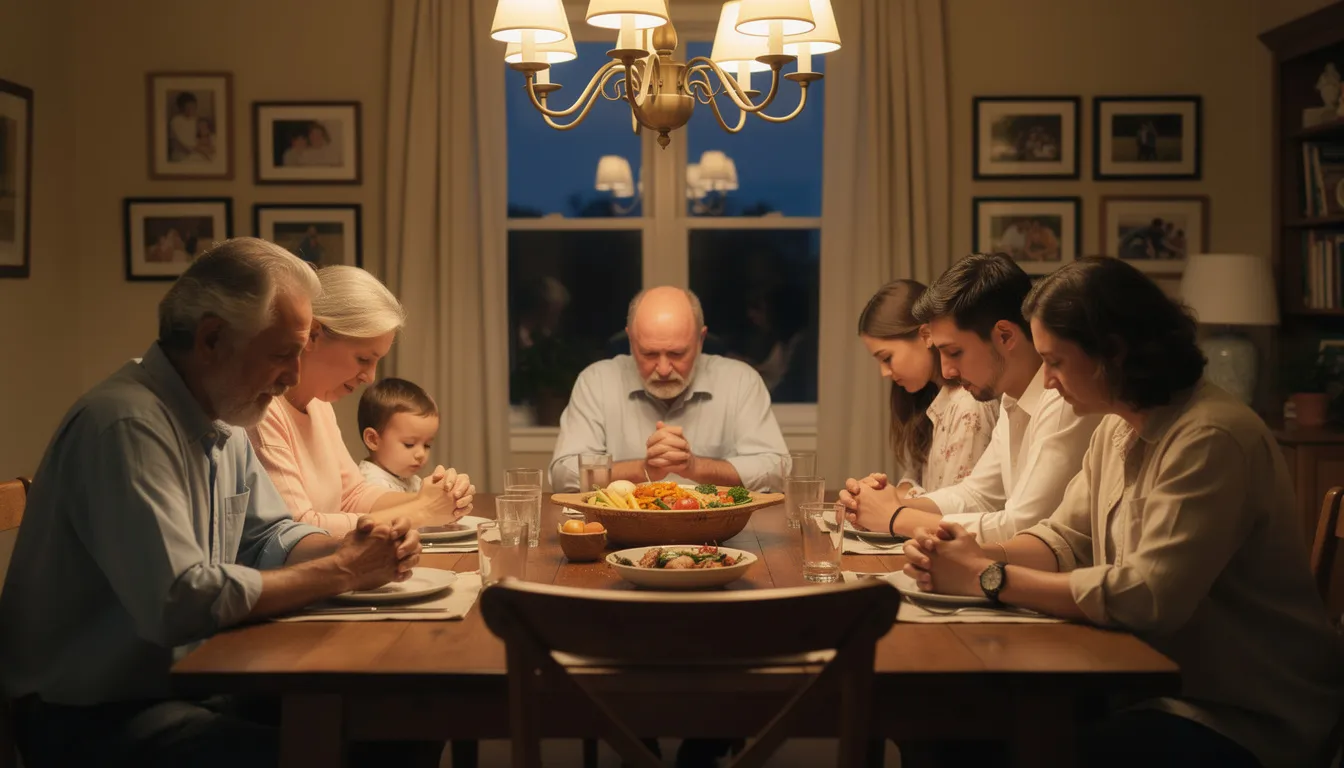
- 10–20 second prayers before meals, bedtime, or big events
- Praying out loud when something hard happens: “God, we need Your help with this”
- Keeping it simple: “Thank You, Lord, for this food and this family. Amen.”
Gratitude moments
- Go around the table at dinner and each share one thing you’re thankful for
- Encourage kids to notice small gifts—a friend’s text, a good grade, a sunny day
- Model gratitude yourself: “I’m thankful my meeting went well today”
Naming hard days
- Say, “Today was really tough at work,” and briefly invite God into it while your family listens
- Allow kids to name when they feel sad or angry, and pray a simple one-sentence prayer with them
- Show that bringing hard things to God is normal, not dramatic
Asking good questions
- “Where did you see something kind today?”
- “What do you think God is like when you’re scared?”
- “What’s something you’re wondering about right now?”
Use these as conversational openers, not quizzes with right answers.
Modeling repentance and repair
When you overreact, go back and say: “I’m sorry. That wasn’t okay. Will you forgive me?”
Part of following Christ is making things right when we hurt each other. Your kids are watching.
Pick one or two practices to start this week. You don’t need to do all of them. Progress, not perfection.
Spiritual Leadership Without Control or Fear
Some spiritual models use fear, shame, or control to keep kids “in line.” Jesus never did this.
Harmful patterns to avoid
- Using God or the Bible as a threat: “God won’t love you if you do that”
- Shaming kids for doubts, questions, or mistakes: “Good Christian kids don’t act that way”
- Making faith feel like something to fear rather than something to trust
Creating emotional and spiritual safety
A spiritually healthy home is where:
- Tears, questions, and confessions are met with compassion
- Kids can talk about doubts without being shut down or lectured
- Mess-ups don’t mean rejection
Practical ways to build safety
- When kids confess something hard, start with “Thank you for telling me” before addressing the issue
- Share times you’ve struggled or failed so your kids know they’re not alone
- Avoid overreacting to bad news—your calm presence builds trust
Moral guidance without fear
You can clearly communicate family values (honesty, respect, kindness) while also showing how grace and consequences coexist. God’s love is stable even when behavior falls short.
Kids who associate God with safety and love are far more likely to stay open to faith as teenagers and adults than kids who associate God with fear and control.
What Matters More Than Doing It “Right”
Perfectionism and comparison can paralyze spiritual leadership. Watching other dads, pastors, or families on social media and feeling like you’ll never measure up is exhausting.
Here’s what actually matters:
Consistency over intensity
A few small habits repeated over months and years have more impact than occasional “big” spiritual moments. Reading one verse together weekly for a year beats a dramatic family devotional that happens once.
Repair over perfection
Owning mistakes and rebuilding trust is more powerful than never messing up. Kids remember dads who apologized and made things right.
Presence over performance
Being emotionally and spiritually available matters more than polished prayers or well-run family devotions. Your son will remember that you listened when he was sad, not whether you used the right theological terms.
Celebrate small wins
- One honest conversation in the car about fear or faith
- One night where the family prayed together when usually they don’t
- One Sunday where everyone made it to church with shoes on
Release unrealistic standards
Spiritual leadership at home doesn’t have to look like someone else’s home, church, or social media highlight reel. Your family is unique. Your path will look different.
Kids will remember how their dad made them feel—seen, heard, and loved—more than the exact words he prayed or the number of Bible chapters he explained.
Conclusion: Leading by Showing Up
Being a spiritual leader as a father is about how you show up—serving, listening, and turning toward Jesus in front of your family. It’s not about having authority, all the answers, or flawless habits.
You don’t become a spiritual leader by acting bigger than you are. You lead spiritually by staying present, honest, and open over time.
Your next step
Choose one small practice from this article to try this week:
- A 10-second prayer before dinner
- A nightly gratitude question at bedtime
- Apologizing the next time you overreact
That’s enough. That’s leadership.

Picture your kids years from now, looking back at their childhood. They won’t remember a dad who had all the answers or never made mistakes. They’ll remember a dad who wasn’t perfect—but who kept turning to Jesus and inviting them along.
That’s spiritual leadership. And it starts with showing up today.



One thought on “How to Be a Spiritual Leader at Home (Without Pressure or Pretending)”